
Rejuvenating the blood: a new pharmacological intervention targeting RhoA in blood stem cells
November 24, 2025
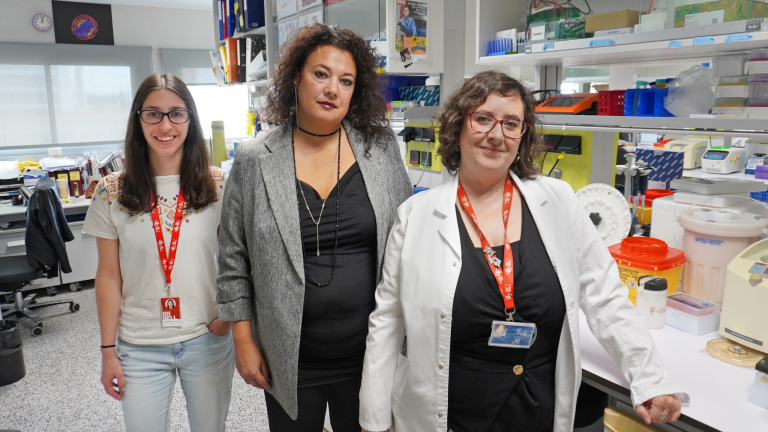
- According to the results published in Nature Aging, treating blood stem cells ex vivo with the molecule Rhosin leads to their rejuvenation and helps produce healthier blood cells.
- Previously, IDIBELL, P-CRM[C] and ICREA Research Professor Dr M. Carolina Florian proved the central role of blood stem cells in the aging of the whole body, suggesting blood rejuvenation as an important biomedical strategy to extend healthspan and lifespan.
- Biomedical strategies that ameliorate the detrimental health effects of ageing will be essential in the future scenario: by 2050, the number of people over 60 years of age will have doubled.
Ageing, defined as the deterioration of the body’s function and structure over time, is one of the main risk factors for numerous chronic diseases. Although it is a complex phenomenon affecting the whole organism, ageing of the haematopoietic system is one of its main drivers. Last September, the P-CRM[C], IDIBELL and ICREA researcher Dr. M. Carolina Florian and her research group underlined the relevance of using blood stem cells to pharmacologically target ageing of the whole body. They also suggested rejuvenating strategies that could extend healthspan and lifespan. Now, in a Nature Aging publication, the research group discovered the rejuvenating potential of the drug Rhosin on blood stem cells. This study was based on the collaboration between Dr. Florian’s team at IDIBELL, where the in vivo and in vitro assays took place, and innovative in silico machine learning techniques by Dr Paula Petrone at the Barcelona Institute for Global Health (ISGlobal), a centre supported by the ”la Caixa” Foundation, and the Barcelona Supercomputing Center-Centro Nacional de Supercomputación (BSC-CNS).
Acting on the heart of the aging process: the nucleus of blood stem cells
Blood stem cells, or hematopoietic stem cells, are located in the bone marrow and are responsible for the vital function of continuously producing all types of blood cells (oxygen transporters, immune cells and platelets). Over time, however, stem cells also do age, they lose their regenerative capacity and generate less and lower quality cells. Their ageing has been linked to immunosenescence, chronic low grade inflammation, several aging-related chronic diseases and cancer. In the cell nuclei, the effects of ageing are evidenced by the accumulation of mutations and the loss of DNA organization inside the nucleus, which builds up mechanical tension and hinder DNA replication.
This study revealed the rejuvenating potential of RhoA in blood stem cells. After figuring out the key role of this protein in the cell ageing process, researchers proved their potential as a pharmacological target for rejuvenation. First, they treated aged blood stem cells ex vivo with Rhosin, a RhoA inhibitor, and they observed how these cells returned to a younger state. As IDIBELL researcher and study co-first author Dr Eva Mejía-Ramírez summarizes: “Overall, our experiments show that Rhosin rejuvenates blood stem cells, increases the immune system regenerative capacity and enhances blood cell production once transplanted into the bone marrow.” The in vitro and in vivo assays were conducted entirely in IDIBELL by the stem cell ageing research group, lead by Dr Florian. Pablo Iáñez-Picazo, “La Caixa” Foundation fellow, and Dr Paula Petrone, from the ISGlobal and the BSC-CNS, used innovative computer vision and machine learning approaches to characterize DNA organization. This project also relies on a long-term collaboration with Prof. Yi Zheng at CCHMC (USA), who had previously developed and validated the Rhosin molecule.
The ageing of society: a not-so-far future health problem
In 2050, the population over 60 years in Western countries will have doubled compared to 2015, leading to an associated increase in the incidence of many chronic diseases such as cancer, dementia and cardiovascular conditions. This will place a major burden on all countries health and social systems. Designing treatments that relieve the negative effects of ageing on health is vital, and they should be based on quality biomedical research, regardless of aesthetic or cosmetic aspects. There is positive evidence on certain lifestyle changes and medications that may qualify as anti-ageing, together with some research lines at a molecular level. However, according to Dr. Florian, “These measures cannot be qualified as rejuvenation because they combat the effects of ageing rather than acting on the process itself. We instead revert blood stem cells to a younger state and make them capable of producing healthier blood cells, ultimately aiming to improve overall health. This is why we talk about stem cell rejuvenation“.
Results are promising and researchers feel very optimistic about how this new strategy might improve the quality of life of the elderly. Now, clinical research must verify whether the results in animal models can be safely and effectively translated to humans. In this line, Dr Florian counted on the IDIBELL Innovation Unit to submit the results for a European patent and to help in translating her findings to clinical applications.
RELATED CONTENT
Reference article: Eva Mejía-Ramírez et al. Targeting RhoA activity rejuvenates aged hematopoietic stem cells. Nature Aging, 2025.