
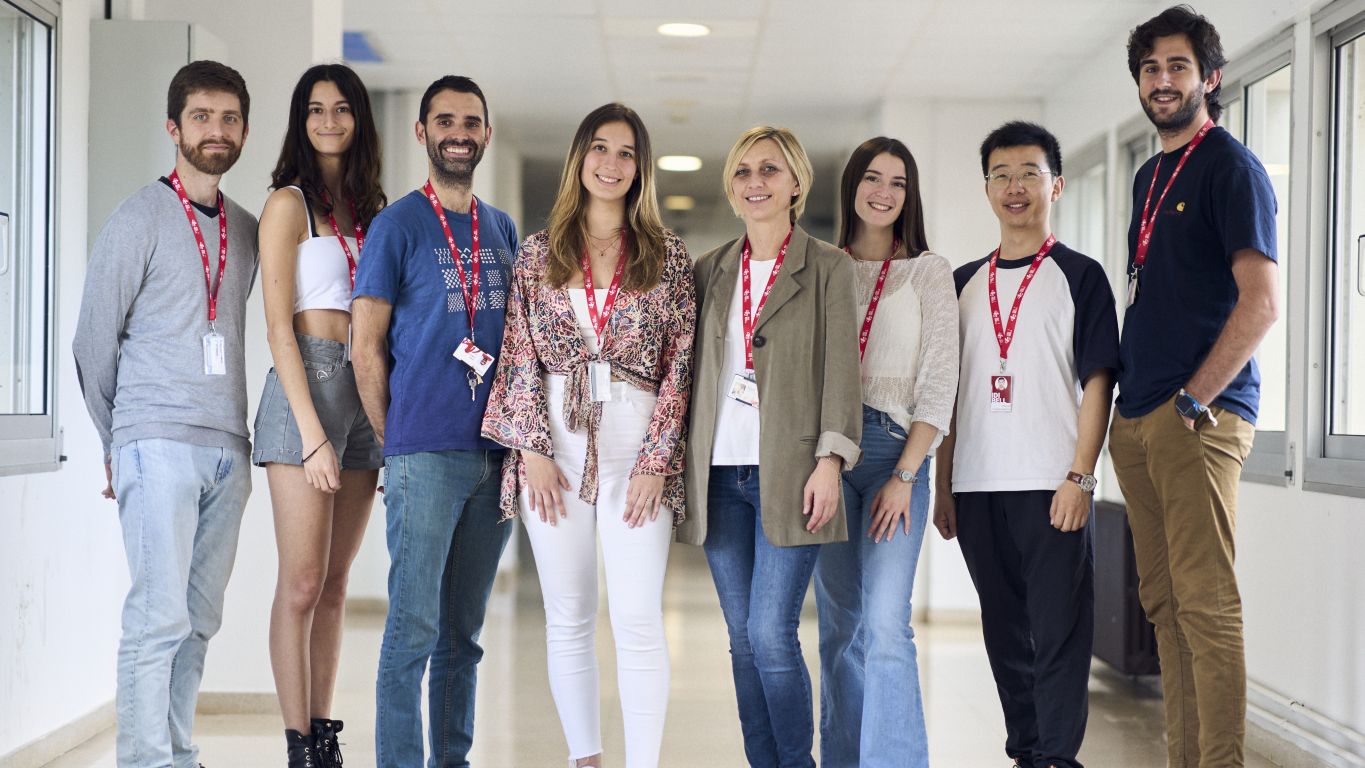
Two parallel and complementary studies conducted by the IDIBELL team led by Dr Alessandra Giorgetti have succeeded in recreating models of GATA2 deficiency disease, a rare genetic disorder that affects fewer than 1 million people worldwide. Thanks to these new models developed by Dr. Giorgetti’s team, we now have a clearer understanding of the molecular process by which the haematopoietic stem cells of these patients become cancerous.
Studies reveal that the initial mutation in GATA2, a gene essential for blood cell formation, promotes premature ageing of blood stem cells and facilitates the accumulation of errors during cell division. In addition, the research team describes the involvement of genetic events that precipitate acute myeloid leukaemia in patients with this disorder.
The research was carried out in collaboration with researchers from the Germans Trias i Pujol Institute (IGTP), the Sant Joan de Déu Research Institute (IRSJD), the Hospital de Mar Research Institute and the Josep Carreras Leukaemia Research Institute (IJC), among others, and was developed thanks to funding from La Marató, EHA, ERAPerMed and the Spanish Ministry of Science.
The starting point: mutation in GATA2, a key gene in blood cells
The first study, published in Leukemia, focused on investigating the effect of the GATA2 mutation on blood stem cells. To do this, a new cell model was generated by introducing the GATA2 mutation using advanced gene editing techniques (CRISPR-Cas), which revealed that the mutated cells showed signs of ageing compared to healthy cells.
“GATA2 is a crucial gene for haematopoietic stem cells to maintain normal blood cell production. When its function is altered, the cells begin to fail: they lose their ability to divide, make mistakes in the process and lose their regenerative capacity. In other words, their functional capacity is reduced, similar to what happens with aged stem cells,” explains Damià Romero Moya, first author of the study and postdoctoral researcher at IDIBELL.
Malignant acceleration: the impact of secondary mutations

However, the GATA2 mutation alone is insufficient to lead to the development of leukaemia. It is a predisposing factor, but secondary mutations are needed to initiate the progression of the disease and the transition to myelodysplastic syndrome or leukaemia.
In the second study, the team introduced the secondary mutations most found in patients, particularly in two genes (SETBP1 and ASXL1), into their cell model to determine their exact impact. “GATA2 mutations prepare fertile ground for genetic instability, but on their own they do not trigger the cancerous process. They define a context in which it is easier for additional mutations related to premalignant stages to appear, which we have detected in patients. The combination of SETBP1 and ASXL1 would act synergistically, collapsing the production of healthy blood cells and promoting leukemic transformation,” explains Joan Pera, first author of the second study, recently published in Nature Communications, and predoctoral researcher at IDIBELL, together with Dr Oskar Marín-Béjar, emerging researcher at IGTP in the OTR group, previously part of the IDIBELL team.
The IDIBELL team concludes that the combination of the three mutations results in severe haematopoietic impairment and drives the natural history of the disease towards leukaemia. Among the three mutations, SETBP1 appears to be the main driver of malignancy.
Seeking a cure beyond stem cell transplants
GATA2 deficiency is a rare genetic disorder, present from birth, which can have a wide range of clinical manifestations, from immunodeficiencies to deafness and a high probability of developing blood cancers throughout life. In fact, it has been estimated that 80% of individuals with this disorder suffer from myelodysplastic syndrome, a group of blood disorders with low malignant potential which, despite this, in 1 in 3 cases can progress to a fast-growing cancer: acute myeloid leukaemia.
“The two articles we have published describe, for the first time, a model for studying the most common paediatric haematological neoplasia predisposition syndrome, GATA2 deficiency. Also, they identify possible mechanisms involved in the progression to leukaemia associated with this genetic defect. These advances open new avenues for more accurate patient monitoring and the development of future therapeutic strategies,” explains Dr Albert Català of the Sant Joan de Déu Research Institute.
The cell models developed in IDIBELL’s laboratories, which faithfully represent the mutations observed in paediatric patients with this disorder, not only allow it to be studied in detail but also serve as a platform on which to test different drugs that attempt to restore the functionality of the affected stem cells. “Currently, GATA2 deficiency is a disorder that can only be cured with a stem cell transplant. With the new models we have generated, we hope to provide the scientific community with a tool that will help develop therapeutic strategies to correct the original mutation more easily,” says Dr. Alessandra Giorgetti, director of both studies, leader of the P-CMR[C] and IDIBELL research group on Haematopoietic Stem Cell Biology and Leukaemogenesis, and professor at the Faculty of Medicine and Health of the University of Barcelona.