
- Inflammation leaves a persistent molecular memory in intestinal epithelial cells, allowing them to respond more rapidly to future injuries.
- The findings open new avenues for understanding how a history of inflammation may influence tissue regeneration and inflammatory bowel diseases.
The intestine has an extraordinary capacity for regeneration. Every day, millions of cells on its surface are renewed to maintain a barrier that is essential for health. This constant renewal process is particularly important because the intestine is continuously exposed to mechanical stress, food, the microbiota and, at times, inflammatory processes that can damage its tissue.
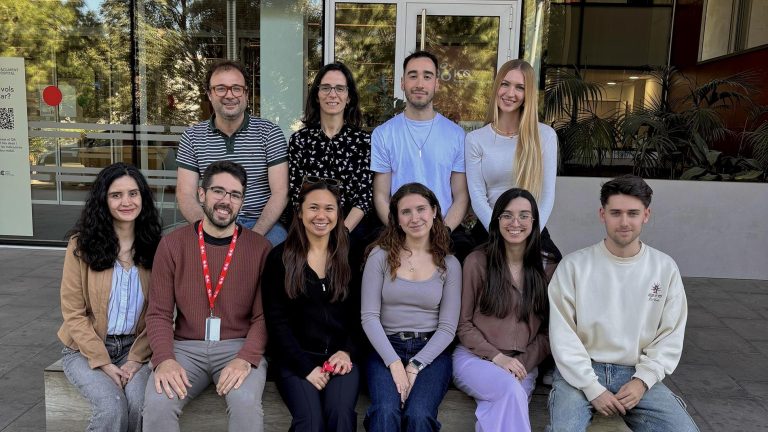
In inflammatory bowel diseases, such as Crohn’s disease and ulcerative colitis, these injuries can occur repeatedly over time, forcing the intestine to activate repair and regeneration mechanisms again and again. A team from IDIBELL’s Regenerative Medicine Program (RegenBell), led by Dr. Jordi Guiu, in collaboration with CIBER-BBN, has focused on this regenerative process following inflammatory damage and made a surprising discovery: intestinal epithelial cells posess a form of “memory” that enables them to retain a molecular record of past injuries.
As reported in a recent study published in Nature Communications, the team found that inflammatory episodes leave a long-lasting imprint on intestinal cells, enabling them to respond much more rapidly and efficiently to future injuries. In essence, the cells retain information from previous experiences, learn from them, and adapt their regenerative response to optimize it. “This means that the intestine does not return to exactly the same state after an injury,” explains Jordi Guiu. “The cells retain a molecular imprint of the inflammation that alters their behaviour and prepares them to cope better with future injuries.”
A tissue prepared for the next injury
To study this phenomenon, the team used experimental models of intestinal injury and analysed, cell by cell, what happens during tissue recovery. The results showed that even after inflammation had completely subsided and the intestine appeared fully regenerated, the cells retained changes in both gene activity and DNA organization.
This molecular imprint acts as a memory of the previous injury, with important functional consequences. In the animal models studied, those that had previously experienced an injury recovered more quickly when faced with a second one. The animals regained body weight sooner, and at the cellular level, repair and proliferation mechanisms were activated earlier. “This is not a memory in the conventional sense of the word, but a biological memory encoded within the cells’ genetic material,” says Dr. Guiu. “It is as if the cells had learned from the previous experience.”

Inflammation leaves a lasting mark
The study also identifies a specific molecule as one of the main drivers of this memory process: interferon gamma (IFN-γ). Traditionally associated with inflammatory responses, interferon gamma proved critical in establishing this regenerative memory. When researchers blocked its activity, much of the regenerative advantage gained after a first injury disappeared.
These findings reinforce an increasingly accepted concept in regenerative medicine: inflammation is not merely a transient response to injury. Beyond triggering the immediate repair process, coordinated through immune cells such as macrophages (news), it can also reshape tissues over the long term and influence how they respond in the future. “For many years we have known that inflammation activates intestinal regeneration mechanisms after injury. We are now beginning to understand that these episodes not only repair the tissue but can also reprogram it,” explains Dr. Guiu.
New questions about intestinal health
The RegenBell team emphasizes that this is basic research, but believes the results open exciting new avenues for understanding how a history of inflammation and injury can influence long-term intestinal health.
In the future, this knowledge could help explain why some patients recover more effectively than others after repeated inflammatory episodes, such as those experienced by people with inflammatory bowel diseases. It could also improve our understanding of how persistent inflammation alters cellular behaviour and what role it may play in the development of other disorders. “We increasingly understand that tissues retain traces of past experiences,” concludes Dr Guiu. “Understanding how this memory is formed and what consequences it has will help us better understand both regenerative processes and the origins of certain diseases.”